
Somewhere in a drawer is a membership card for a gym near an old office, used for six weeks and then forgotten when the commute changed. You are thinking about starting again, and this time the choice is a little wider: another membership, a personal trainer, or one of the newer options where the trainer comes to you.
The honest answer is that both work for some people and neither works for everyone. What follows is a way to think it through for your own situation, in the Philippines, with the traffic and heat and household you actually have.
What a gym membership buys you
A membership buys access. Machines, racks of dumbbells, treadmills, air conditioning, showers, and often a class timetable. For the monthly fee you can go as often as you like, at any hour the branch is open.
What it does not include is anyone whose job is to make sure you actually turn up, or that you know what to do once you are there. The floor staff will show you how a machine works. They will not write you a plan or notice that your squat has gone wrong.
For people who already know what they are doing and live or work close to a branch, that is a fine deal. The equipment is far beyond anything that fits in a condo, and a well run gym is a pleasant place to spend an hour.
What a personal trainer buys you
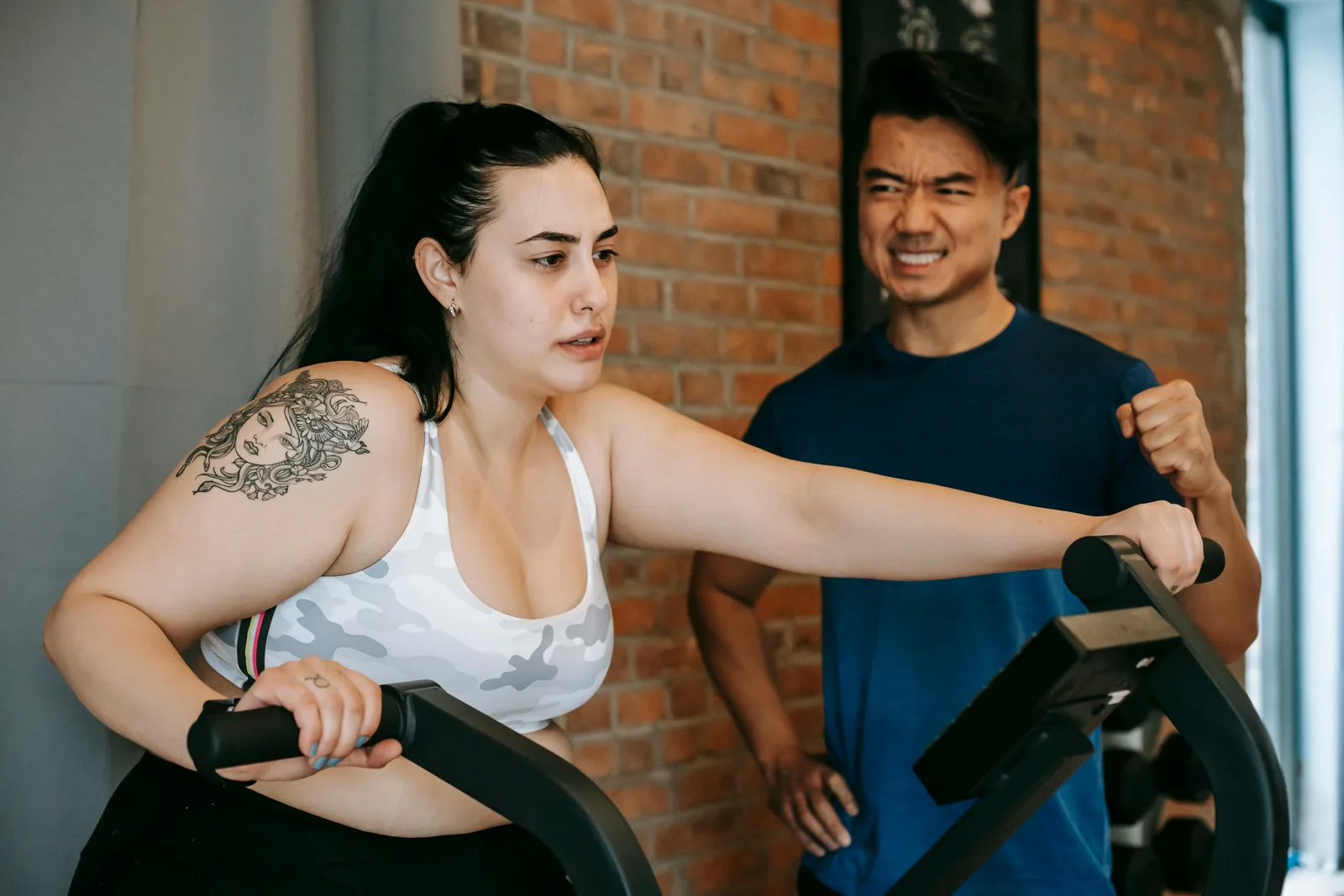
A personal trainer (a coach, in plain terms) sells time and attention. In a session they watch how you move, correct you, decide what comes next and keep a record. Between sessions they usually give you something to do on your own.
The first meeting normally includes a consultation, which is a conversation about your health and history, then a movement screen, which is a short set of basic movements the coach watches to see how your body moves, then a talk about goals and a written plan. From there each session builds on the last.
Trainers work in two places. Some are attached to a gym, and you book them on top of the membership. Others come to you: your home, the condo gym downstairs, the village clubhouse, a public park or a gym you already pay for. Fit Bud coaches work the second way across central Luzon and Metro Manila, and online everywhere else in the Philippines, bringing bands and dumbbells or kettlebells as agreed, with a transport charge that depends on the distance.
The commute decides more than the price
Ask anyone who let a membership lapse why they stopped. The answer is very rarely the money. A common pattern is that the gym was twenty minutes away on paper and an hour away at six in the evening on EDSA, and by the fourth week the hour won.
This is the strongest argument for a trainer who comes to the house. The session happens whether or not NLEX is moving. There is no gym bag to carry onto a jeepney and no parking to find. If you live in a subdivision in Pampanga or Bulacan where the nearest decent gym is a long drive, the difference between the two options is really the difference between training and staying home.
A membership works best when the branch is on the way to somewhere you already go every day. The office, the children’s school, the wet market on a Saturday morning. If it needs its own trip, be honest with yourself about how many of those trips will happen in the rainy season.
Where each option quietly fails
A membership fails through absence. Nobody notices when you stop going, and the direct debit keeps running. In our experience most lapsed memberships die around the third month, after a busy week breaks the habit and there is nobody to restart it with.
A trainer fails differently. A poor coach gives everyone the same programme, talks through the whole session, or pushes a beginner too hard in week one so they are too sore to come back. Sessions are also fixed appointments, which is a strength for most people and a nuisance for anyone whose shifts change weekly.
Home training has its own small snags. A studio unit needs a cleared two by two metre patch. A brownout in the afternoon means training by the window with the door open. The neighbours might comment. None of these stop a session, but they are real.
Thinking about cost without a price list
Fees vary a great deal by city, by gym chain and by coach, so any number printed here would be wrong for you within a month. The useful comparison is the cost per session you actually attend.
Used four times a week, a membership is cheap. Used twice a month it is expensive, and that second version is the one most people end up with. That is the trap. A trainer costs more per hour and often less per hour used, because the hours get used.
Then there is what you are buying the hour for. If the goal is to lose the weight that arrived with a desk job, to learn to lift without hurting your back, or to get a parent in their sixties strong enough to manage the stairs, the outcome matters more than the price of a visit. Those goals depend on doing the right things consistently, and that is exactly what a coach is for.
Mixing the two
The choice does not have to be either or. Plenty of people keep a gym membership and see a coach a few times to learn a programme, then carry it out alone. Others train at home with a coach during the week and use the gym on a Saturday for the heavy equipment.
Small group sessions are another middle road. Two to four friends or family members splitting a coach’s time in a village clubhouse brings the cost per person down and adds the company that makes people turn up. It also suits couples who want to train together but have different goals, since the coach can run two programmes side by side.
Online coaching sits at the far end. A video call, a written programme and messages in between, for people who travel a lot or live outside the areas a coach can reach.
A quick way to choose
Answer four questions honestly.
- Is there a decent gym on a route you already travel every day? If yes, a membership has a real chance.
- Do you know what to do with the equipment once you are inside? If no, you need a coach for at least the first stretch, whichever option you pick.
- Have you lapsed before? If yes, the fixed appointment of a trainer is worth more than it looks.
- Do you have a two by two metre patch of floor and a household that will tolerate a coach in the living room once or twice a week? If yes, home training is on the table.
Results depend on the person, the goal, sleep, food and how many weeks the habit survives. Whichever way you go, the version you are still doing in November is the right one.